Tiered Link Building With GSA SER
Understanding Tiered Link Building
Tiered link building is a strategic SEO method where backlinks are organized into layers to maximize authority flow while insulating a money site from low-quality links. The core idea is simple: instead of pointing every backlink directly at your main website, you create a hierarchy. The first tier consists of high-quality, relevant links that point directly to your money site. A second tier points links at those first-tier properties, boosting their authority. A third tier can fire even more links at the second tier, and so on. This layered arrangement allows you to safely leverage massive volumes of automated links without triggering penalties, because the risk sits at the outer tiers.
Where GSA SER Fits Into the Picture
GSA Search Engine Ranker (GSA SER) is one of the most aggressive and versatile automated link-building tools on the market. It can create accounts, post content, and build links on thousands of platforms—from blog comments and forums to social bookmarks, wikis, and web 2.0 properties. Because of its sheer volume and speed, using GSA SER to blast links directly at a money site is dangerous. The real power of the tool shines when you deploy it as part of a tiered link building with GSA SER campaign. You use it to construct and reinforce lower tiers, feeding link juice upward while keeping your primary domain squeaky clean.
Building a Solid Foundation: Tier 1
Tier 1 is the layer that touches your money site directly, so quality matters more than quantity. Here, you typically avoid fully automated blasts. Instead, you create hand-crafted assets such as niche-relevant guest posts, editorial-style articles on high-authority sites, curated web 2.0 blogs (like WordPress.com, Blogger, Tumblr), and top-tier directory submissions. The content on these properties must be unique, valuable, and thematically aligned with your niche. GSA SER can still play a role in verifying and indexing these Tier 1 links, but the link building itself is usually manual or semi-automated.
Content and Context for Tier 1
Each Tier 1 property needs a well-written article with natural anchor text variation. Branded anchors, naked URLs, and generic terms should dominate. Exact-match anchors should be used sparingly, if at all. The goal is to earn trust from search engines while passing relevance to your money site. When done right, these properties become authoritative hubs that will later be supercharged by the power of tiered link building with GSA SER.
Supercharging Authority: Tier 2 with GSA SER
This is where GSA SER takes center stage. Tier 2 links point at your Tier 1 properties, not at your money site. Because the target URLs are your own web 2.0 blogs, articles, and profiles, you can afford to be more aggressive. GSA SER can be configured to build thousands of contextual links, social bookmarks, forum profiles, and wiki entries. The key is to use spun content that is readable enough to pass moderation filters but produced at scale. You can set up projects in GSA SER with carefully chosen platforms and filtered by metrics like PR, OBL (outbound links), and engine-specific rules.
Configuring GSA SER for Tier 2 Efficiency
A successful tiered link building with GSA SER setup relies on proper configuration. You should limit the number of verified links per day to avoid leaving unnatural footprints. Use proxies, captcha-solving services, and a rotation of email accounts. Within GSA SER, you can import your Tier 1 URLs as targets and define multiple anchor text sets. A mix of generic, branded, partial-match, and even some exact-match anchors pointing at Tier 1 properties helps diversify your link profile. Indexing these Tier 2 links is critical; many SEOs use indexers or additional GSA SER projects to push tiered links into search engines’ visibility.
Expanding the Pyramid: Tier 3 and Beyond
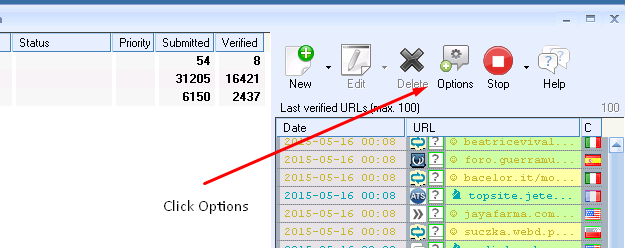
For extreme link volume, a Tier 3 can be added. This layer points links at your Tier 2 backlinks, further amplifying their power. In a pure tiered link building with GSA SER model, Tier 3 is a free-for-all where link quality can be minimal. Blog comments, trackbacks, guestbooks, and low-quality directories are fair game. The content can be heavily spun and nearly unreadable. The purpose is to inflate the apparent popularity of Tier 2 links, helping them stick and transfer more authority upward. Because this tier is so far removed from the money site, the risk is negligible.
Automating the Entire Funnel
You can chain multiple GSA SER projects together. Project A builds Tier 2 links to your web 2.0 sites. Project B takes the verified URLs from Project A and uses them as targets for Tier 3 blasts. This cascading automation saves enormous time and creates a self-sustaining link ecosystem. However, monitoring is essential. Use GSA SER’s built-in scheduler and filters to pause campaigns if links are disappearing too fast or if server resources are strained.
Anchor Text Planning Across Tiers
A common mistake is over-optimizing anchor text at any tier. For Tier 1, stick to brand and URL anchors. For Tier 2, you can introduce more varied commercial keywords, but keep the distribution natural. At Tier 3, anchor text can be completely random, even spammy, because it targets garbage links that nobody will manually review. A smart tiered link building with GSA SER blueprint uses a pyramid of anchor text control: strict at the top, looser at the bottom. This mirrors how a natural site would earn links.
Indexing and Longevity
Even the most powerful links are worthless if they remain uncrawled. Tier 2 and Tier 3 links built with GSA SER often need help getting indexed. Services like Omega Indexer or a dedicated indexer project inside GSA SER can ping, submit to RSS feeds, and build social signals. Additionally, you must accept that many automated links will perish over time. That’s why the tiered model relies on volume: a steady churn of fresh links keeps the lower tiers alive. Regularly replace dead web 2.0 properties and adjust GSA SER campaigns to target new platforms.
Common Pitfalls and How to Avoid Them
One of the biggest dangers is creating a traceable footprint. If all your Tier 1 properties share the same IP, use identical themes, or have the same registration details, search engines can connect the dots and devalue your network. Use multiple hosting accounts, varied email addresses, and different content structures. Another pitfall is neglecting Tier 1 maintenance. Even though GSA SER handles Tiers 2 and 3, you must occasionally update and refresh your Tier 1 content to keep it looking alive and authoritative. Finally, never point automated links directly at your money site unless you are in a churn-and-burn scenario. The whole philosophy behind tiered link building with GSA SER is to shield your main asset.
Measuring Success
Track organic rankings for target keywords, but also monitor the health of your tiers. Tools like ScrapeBox, Ahrefs, or even GSA SER’s own built-in stats can show you how many Tier 2 and Tier 3 links remain live. A gradual increase in referral traffic from Tier 1 properties to your money site indicates the strategy is working. If you see a ranking boost followed by a sudden drop, it may be a sign that your Tier 1 quality was insufficient or that you built links too aggressively. Continuously tweak the velocity, platform selection, and content spin readability based on performance data.
In the right hands, **tiered link building with GSA SER** gives you the best of both worlds: the SER verified list provider brute force of automated link creation and the safety of a layered architecture. It’s not a set-it-and-forget-it tactic, but when executed with care, it can still move the needle for competitive keywords in 2025 and beyond.